7 rules meme coin traders learn from a top Solana scalper
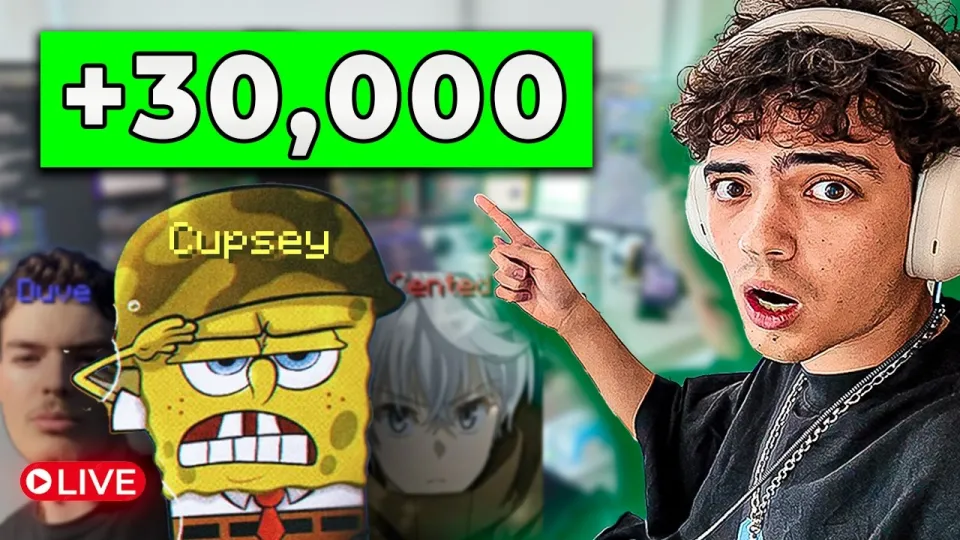
Video: I Traded With The World’s #1 Memecoin Trader
Want articles like this for your own video to promote it on YouTube and Google? Order them through the Telegram bot @sat_sit_bot. Articles with your video embedded are written and posted by the bot itself — on popular topical sites (no ads). Your first 50 articles are free.
· based on the channel Ethan Prosper
A meme coin is a crypto token whose value rests almost entirely on community attention, narrative and liquidity rather than on cash flow or product revenue, and the traders who profit most from them treat it as a speed game: find a new Solana pair, size small, exit fast. The clearest recent demonstration is the Ethan Prosper session with trader Cupsey, where a handful of launchpad trades produced results in the hundreds of SOL. If you want to follow the same execution path, the terminal used in the video is available via registration on the Padre trading terminal, and the wallet addresses of both traders are public, so every entry and exit can be verified on-chain.
What actually happened in the session
The stream's numbers are the useful part, because they show the shape of a professional meme coin day rather than a lucky single bet. Across roughly an hour of trading, the pair worked through a short list of Solana tokens: an early pair of positions (Lobo and a token referenced as 1%) that together produced around +200 SOL, a cheese-themed coin and an AI-cooking token, an Elon/Grok-bot narrative trade worth about +$15K, a "magic internet money" developer token, a Mosaic AI coin that added roughly +80 SOL, and one final trade before signing off.
Three things stand out. First, the total — cited by viewers as 350+ SOL — came from many small-to-medium wins, not one moonshot. Second, every trade was a fresh launchpad pair on Solana, the chain where pump.fun-style issuance made token creation nearly free and where liquidity arrives and leaves within minutes. Third, the traders were rotating capital constantly: a position that stalled was cut and the SOL redeployed, which is why the session looks like a stream of entries rather than a portfolio.
The 7 rules behind a 350+ SOL meme coin session
These are the repeatable mechanics visible in high-level Solana scalping, and each one is a rule you can adopt or reject deliberately.
- Trade the narrative, not the chart. Tokens in the session were chosen for a story people could repeat in one sentence — an Elon-linked bot, an AI-cooking meme, a developer joke. On launchpad pairs there is no meaningful technical history, so the narrative is the only catalyst.
- Enter on liquidity, not on conviction. Professionals buy when a pair has enough depth to exit, not when it has the most hype. Thin pools mean your own sell is the top.
- Size so a zero is survivable. A trader running 350 SOL sessions is not risking the account on one coin; positions are fractions of capital, and the winners are allowed to run while losers are cut at a fixed loss.
- Track wallets, not opinions. Both the streamer's wallet and Cupsey's wallet are public. Following profitable addresses — their entries, their sell patterns, their funding sources — is the core research method in this niche, and it is also how you spot multi-wallet behaviour.
- Use a terminal built for speed. Launchpad sniping requires a dedicated interface with routing, priority fees and one-click exits; the video's terminal link is the tooling layer, and it matters as much as the thesis.
- Farm the faucets. Viewers asked what "faucets" means: in this context it refers to the small, repeatable income streams around trading — referral rewards, airdrops, testnet and quest payouts, and affiliate links — that fund experimentation so trading capital is not the only source of risk.
- Take the day's number, not the month's dream. The session ended with a final trade and a wrap-up, not with an all-in hold overnight. Realised SOL beats unrealised conviction on tokens that can lose 90% while you sleep.
Why this style is the hardest version of crypto trading
The honest framing is that this is speed trading, and the people doing it are full-time operators. A viewer with a large following made the point bluntly: these are the 10-plus-hour-a-day trenchers, this is the most difficult style possible, and nobody has to trade this way to make money. That is not modesty — it is a description of the workload. Scanning new pairs for hours, monitoring wallet flows, and executing dozens of entries demands attention that most people cannot give while holding a job.
There is also an infrastructure gap. Profitable scalpers run multiple wallets, custom alerting, private RPC endpoints and low-latency execution. The same viewer comment that called out multi-wallet behaviour — traders dunking on retail while taking their money — describes a real structural asymmetry: when a known wallet is visible to everyone, the people who understand order flow can position ahead of the crowd it attracts. Copy-trading a public address without understanding that dynamic means buying after the move and selling into the dump.
Finally, the sample is survivorship-biased. A 350+ SOL session gets published; the losing days that preceded the skill do not. Treat the stream as a demonstration of process, not a forecast of your returns.
Common questions from traders watching these sessions
Questions from the audience cluster around a few practical worries, and they deserve direct answers.
- "Isn't this just insider multi-wallet extraction?" Some of it is. Public wallets attract front-running, and launchpad ecosystems have plenty of actors who buy across many addresses and distribute into retail demand. Your defence is checking holder concentration and wallet funding graphs before you enter, not after.
- "How much capital do I need to start?" Less than the stream suggests, but more than zero. You need enough to take several positions without one loss ending the experiment, plus a buffer for priority fees and failed transactions, which are a real cost on Solana during congestion.
- "Can I just copy these wallets?" You can watch them, but copying an entry without their exit plan is the fastest way to lose. Latency, slippage and their ability to sell into your buy are all working against you.
- "Do I have to trade new pairs?" No. Larger, more liquid coins and slower swing styles exist, and many profitable traders never touch a token younger than a week. The comment section's most useful advice was exactly this: be inspired, but learn other styles.
Risk management that survives a launchpad
Risk control on meme coins is mostly about position structure, because stop-losses do not work reliably in pools that can gap 60% in a single block. Practical rules: cap any single launchpad position at a small fixed percentage of your trading stack, pre-decide the exit in tranches (sell part into the first spike, trail the rest), never add to a losing launchpad position, and keep trading capital separate from the faucet income and referral rewards that fund experiments.
Also treat custody seriously. The wallets shared in the video are public by design, which is fine for a streamer tracking performance in public but wrong for your main holdings. Use a fresh hot wallet per strategy, keep long-term SOL elsewhere, and revoke token approvals you no longer need. On Solana, most painful losses in this niche come from signing malicious mint or burn instructions, not from bad chart reads.
Useful links from the session
- Padre trading terminal registration used in the video
- Ethan Prosper's link hub: https://ethanprosper.com
- Cupsey on X: https://x.com/cupseyy
- SOLMAFIA free Discord: https://discord.gg/solmafia
- Pastel paid community: https://www.joinpastel.com/r/ref=ETHAN
Bottom line
Meme coin trading at this level is a job built on narrative selection, wallet intelligence, fast tooling and ruthless position sizing — the 350+ SOL session is the output of that system, not a shortcut anyone can copy from a single video. The realistic takeaway for most readers is to borrow the discipline (small size, fast exits, verified wallets) and skip the pace. If you want to study the execution environment first-hand, start with the same terminal used in the stream and paper-trade the mechanics before risking real SOL. The Ethan Prosper channel is the source of this breakdown, and its value is in showing the process openly — including the parts that look less like a highlight reel and more like a shift.
Key takeaways
- A single session on the Ethan Prosper stream with trader Cupsey cleared roughly 350+ SOL across a handful of trades, with individual wins around +200 SOL and +80 SOL and a +$15K swing on an Elon/Grok-themed token.
- Trades were executed on Solana launchpad tokens via a trading terminal linked from the video (trade.padre.gg), not on major coins or long-held positions.
- The style shown is high-frequency scalping on brand-new pairs, often 10+ hours a day — the most difficult and least forgiving way to trade meme coins.
- Public wallets (the streamer's and Cupsey's) were shared openly, which means their entries and exits are visible to copy-traders and to anyone hunting their liquidity.
- Most retail losses in this niche come from full-porting into influencer-hyped launches and from multi-wallet actors exiting into that demand.
Questions & answers
What is a meme coin in simple terms?
A meme coin is a cryptocurrency whose price is driven by internet culture, community attention and trading liquidity rather than by revenue or utility. Most launch on low-fee chains such as Solana, where creating a token is cheap and pairs can appear within minutes.
How much money do you need to start trading meme coins?
Enough to take several positions without one loss ending the experiment, plus a buffer for priority fees and failed transactions. Professionals in high-frequency sessions risk only a small fraction of their stack per trade, which is why a 350+ SOL day is built from many sized positions rather than one bet.
Can you make money copy-trading public crypto wallets?
Watching profitable wallets is useful research, but copying entries blindly usually loses: you buy later, with worse slippage, and the wallet you follow can exit into your demand. Use wallet tracking to understand behaviour — funding sources, holder concentration, sell patterns — rather than as an automatic signal.
Is meme coin scalping riskier than holding Bitcoin or Ethereum?
Yes, substantially. New launchpad pairs can lose most of their value in minutes, liquidity can be pulled, and stop-losses often fail in thin pools. Experienced traders treat it as the most difficult style in crypto and keep the majority of their capital in larger, more liquid assets.
Source: I Traded With The World’s #1 Memecoin Trader · Markdown version